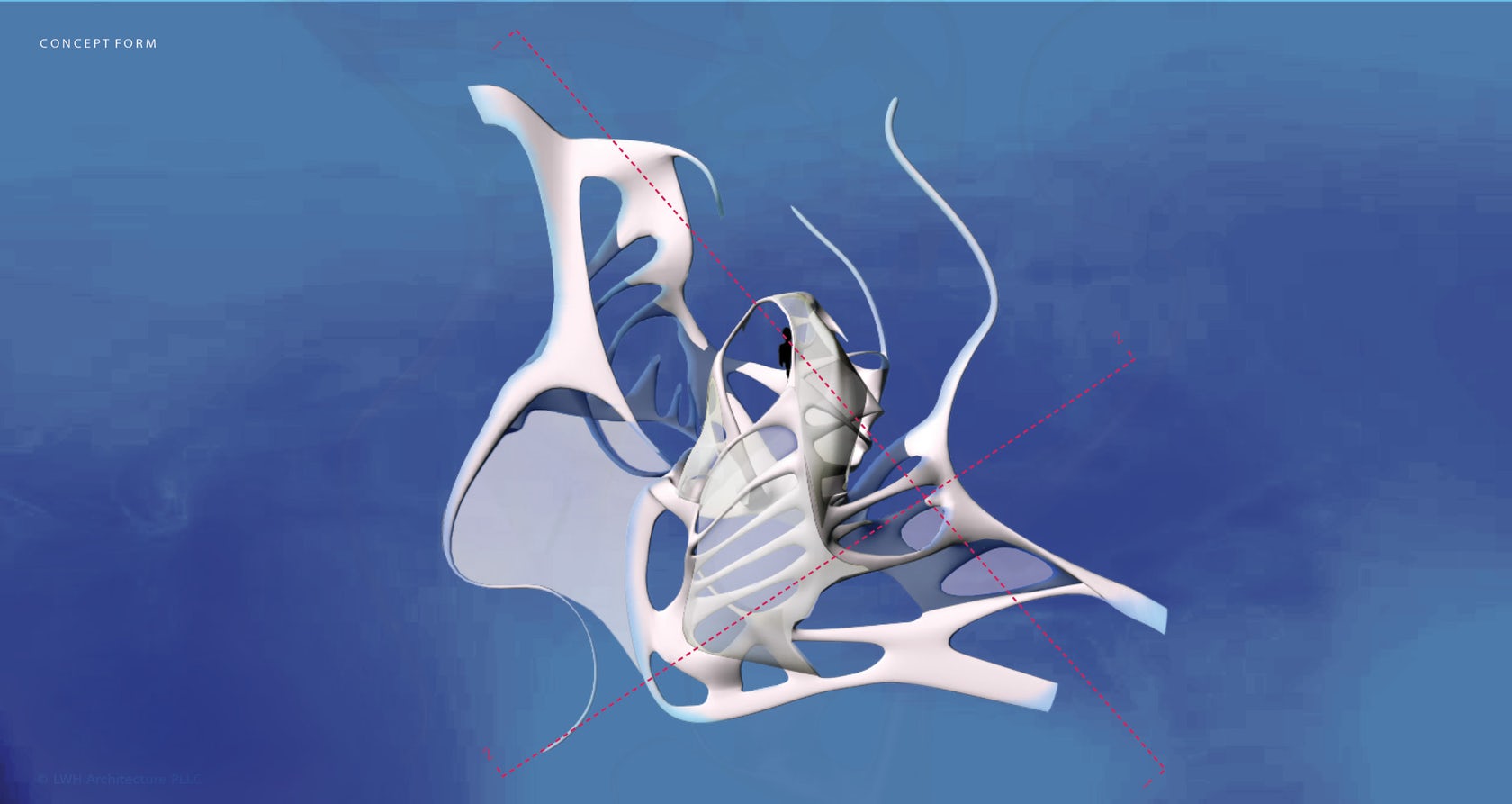
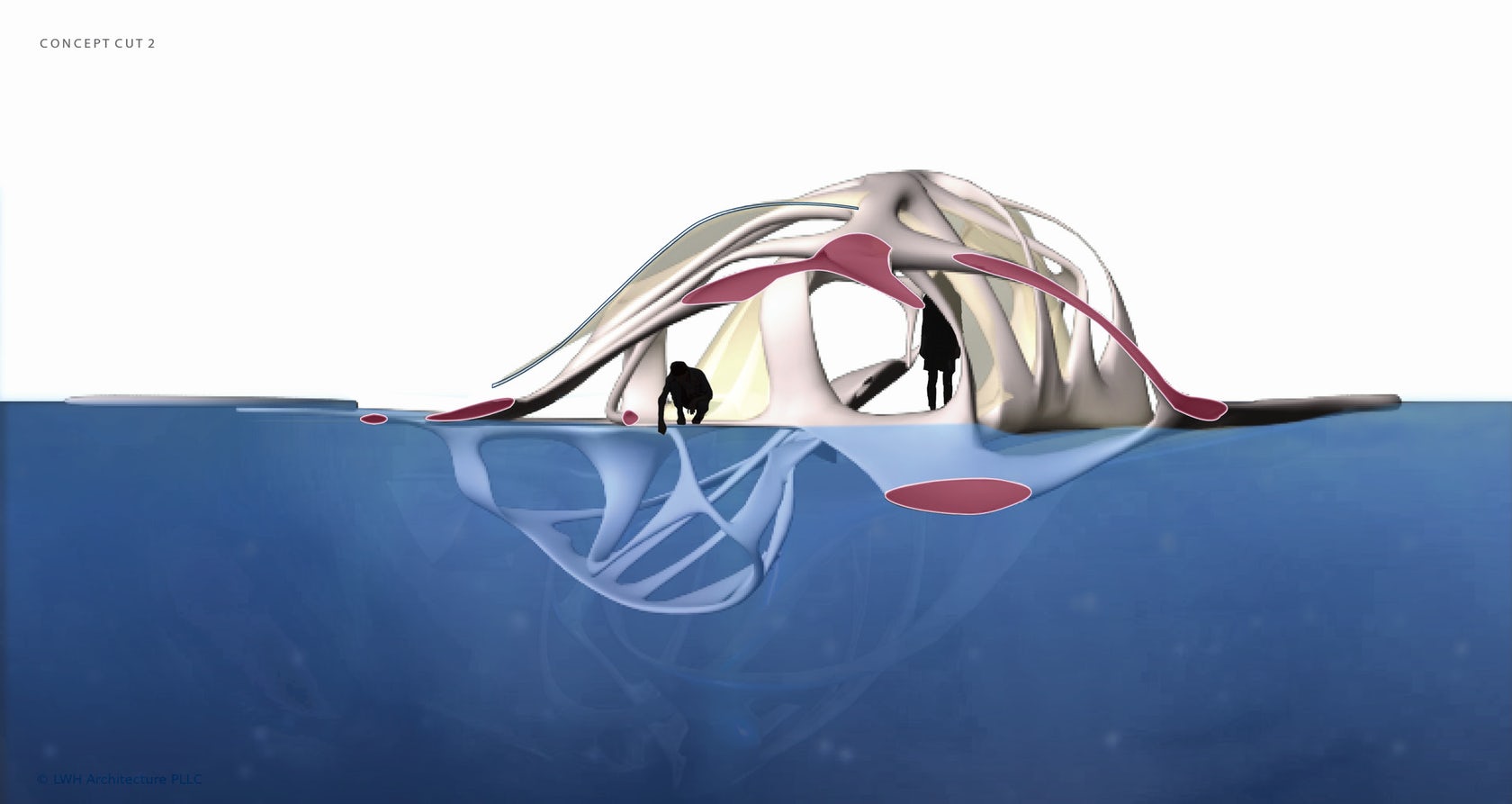
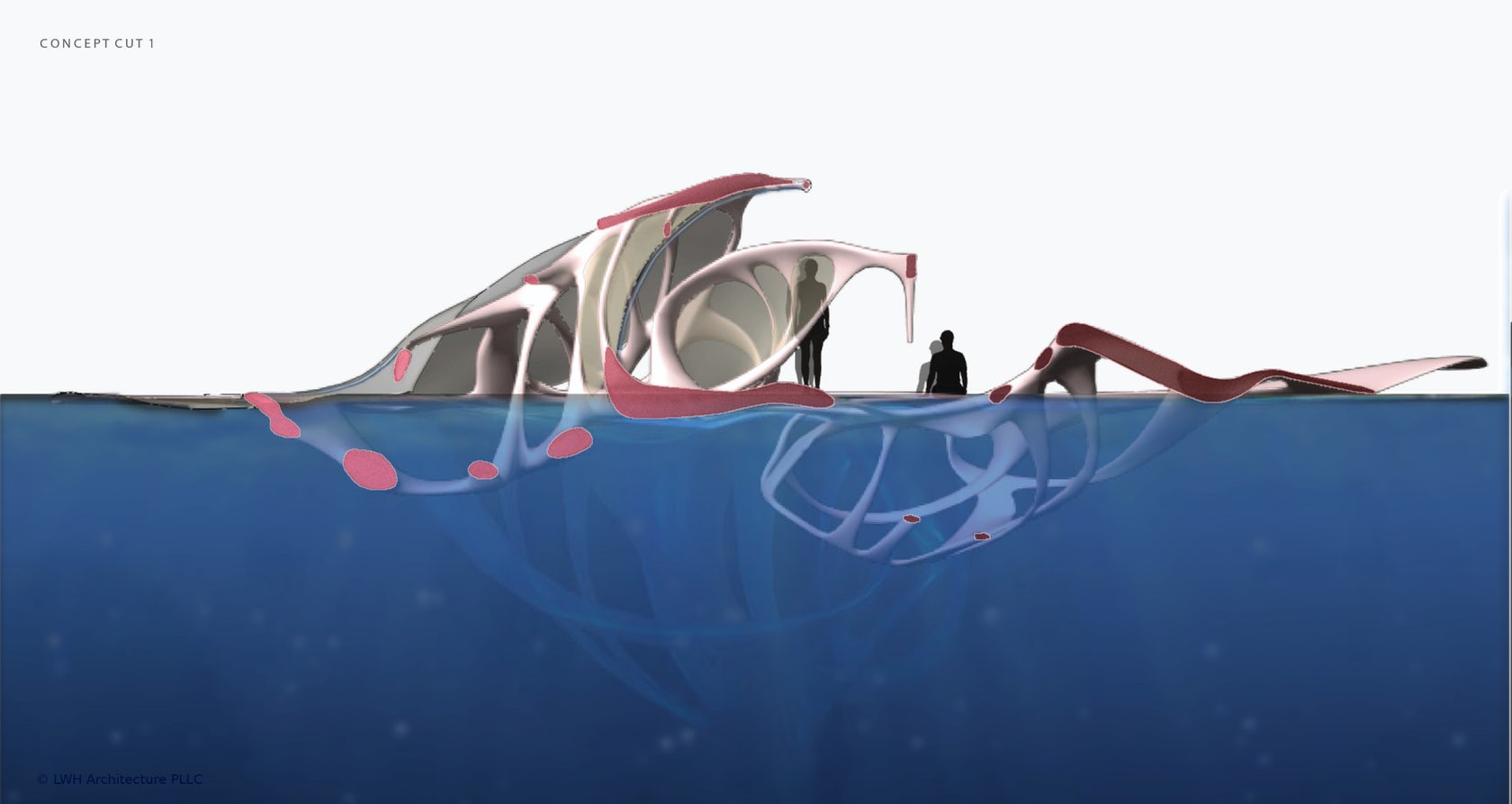
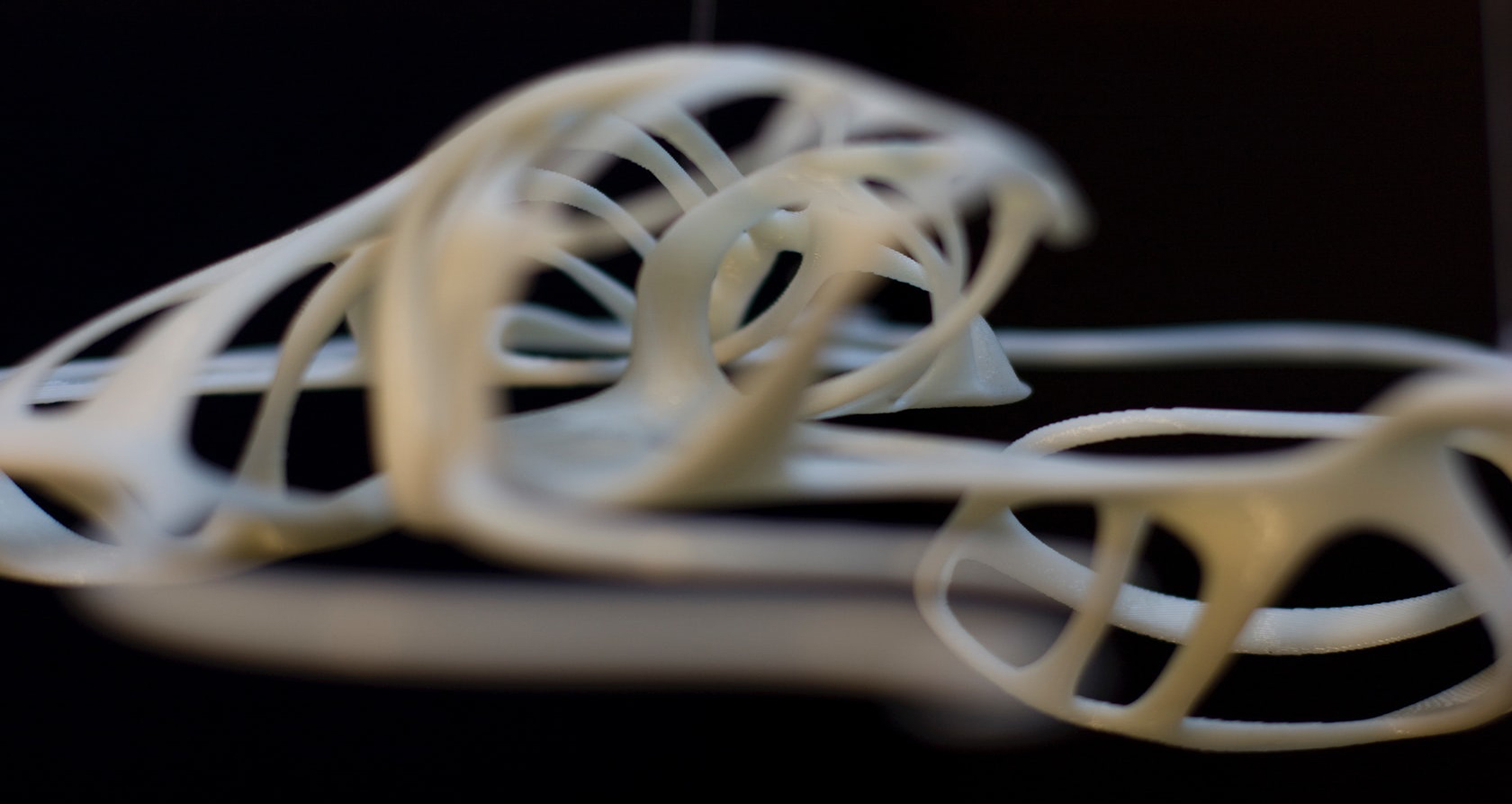

J-Space is a tidal-responsive installation that occupies the threshold between sea and land.
As water levels rise and recede, J-Space transforms: submerged, it becomes a sculpture to swim through and around; exposed, it reveals a studio — a site for solitary reflection or public gathering. Its lifecycle is legible: materials age, deform, and record time. The architecture does not erase its past.
Hydropower / Wave Energy: P = (ρg²TH²L) / 32π
Constructed from biodegradable foams, balsa wood, natural fiber skins, and sealed with bioresin, J-Space is a material ecology. It integrates flexible photovoltaics, piezoelectric sensors, and algae-powered modules — not to maximize output but to visualize energy as atmosphere. Embedded LEDs, triggered by wave motion and tide cycles, animate the pod’s surface in a choreography of environmental feedback.
Developed in collaboration with artist Janaina Tschäpe.